
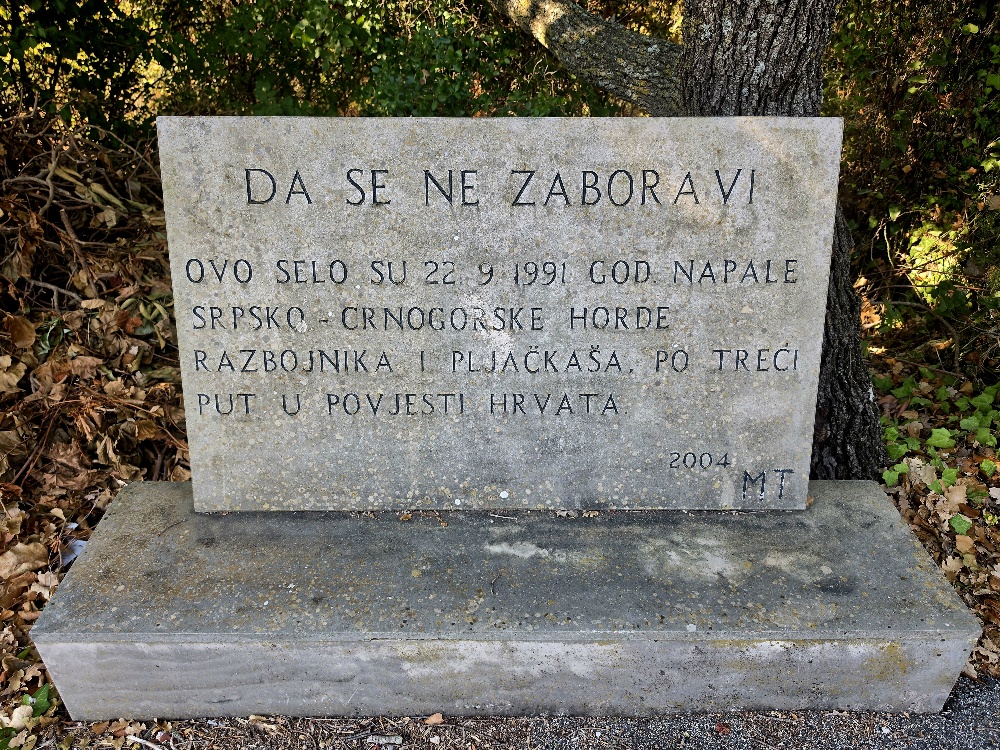
A roadside plaque caught my eye as we drove back from the southernmost tip of Croatia to Dubrovnik airport. I had to stop.
ChatGPT tells me it translates as
“LEST WE FORGET.
This village was attacked on 22 September 1991 by Serbian-Montenegrin hordes of bandits and looters, for the third time in the history of the Croats.”
It was on this day that mortar attacks first hit the village of Vitaljina.
I was in the States in 1991 and have zero recollection of what was happening in this part of the world. It wasn’t in my orbit. And yet now, when visiting and reading about what went on, I wonder how anyone in the world could have missed it.
Farther up the road, I spotted a sign for a church and cemetery – the Church Sv. Spas (Holy Saviour).
We drove up the narrow road to check it out. Part of what I love about visiting cemeteries is that I never know what I will find.
This was a case in point.
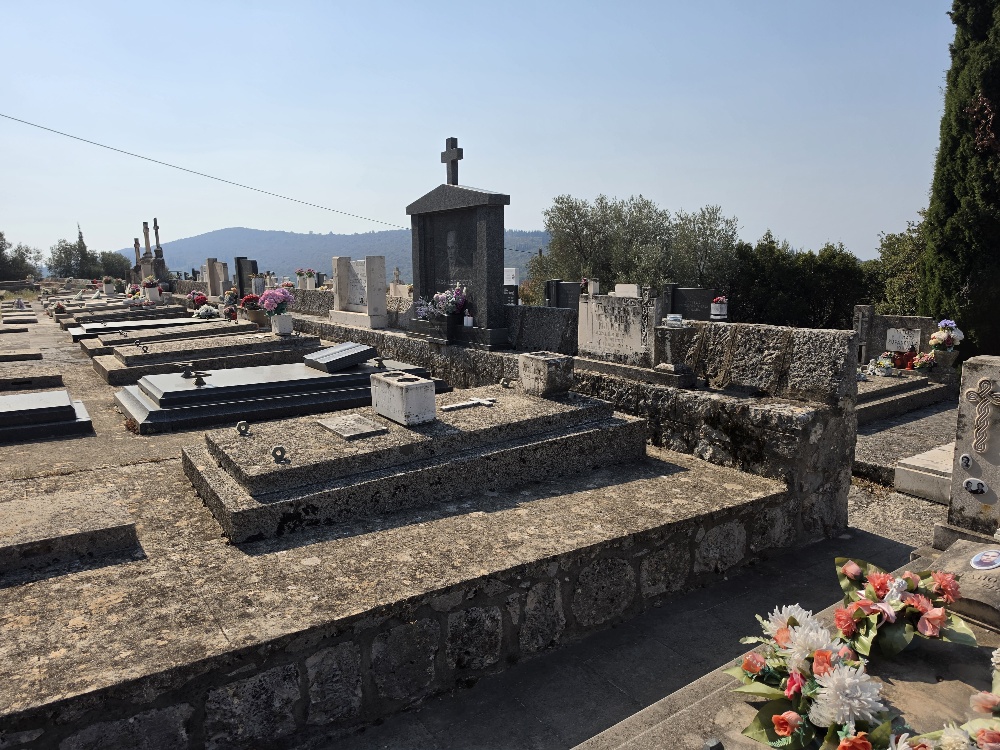
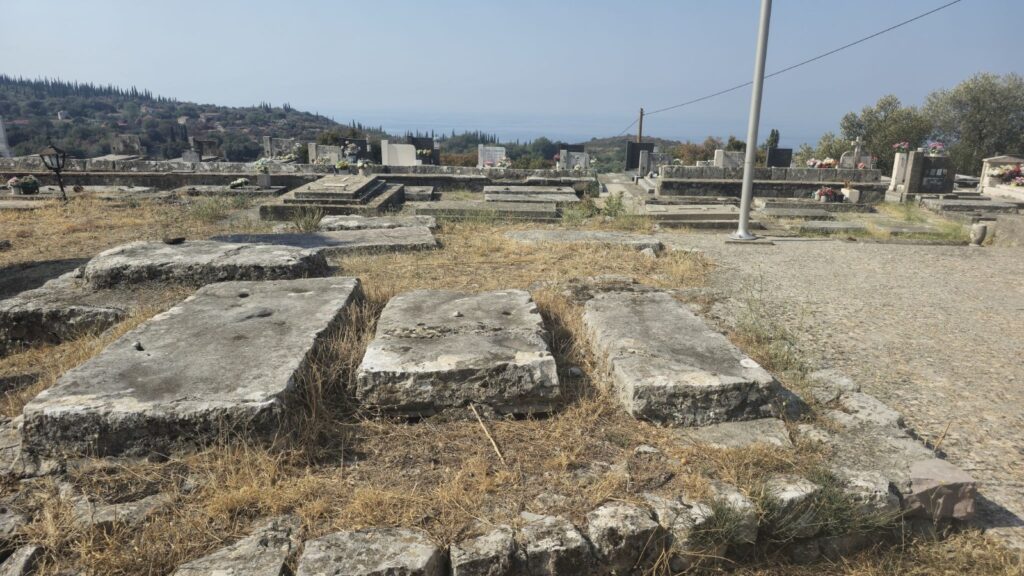
It isn’t just a church and a cemetery. It’s two churches and a mix of more modern and medieval graves. In essence, it’s a medieval burial landscape that has remained in use for centuries. Later family tombs record generations of Vitaljina families, while more recent monuments bear witness to the traumatic history of the Croatian War of Independence.
Wow. Simply wow.
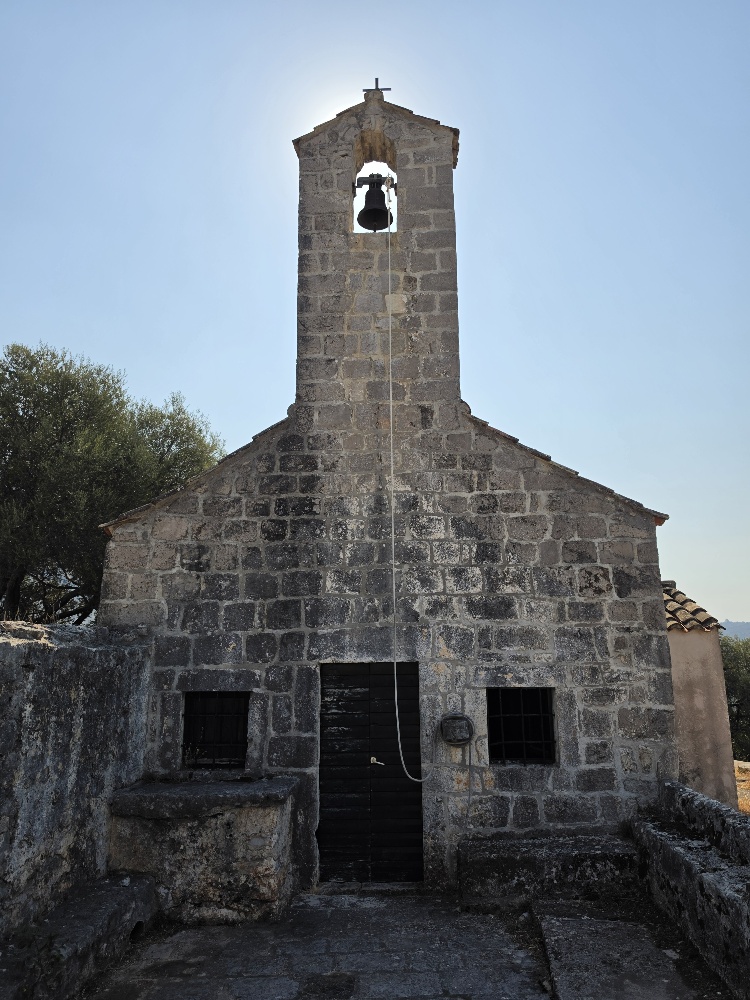
The old church dates to the 15th century and has a particularly tall preslica (bell gable). While it’s still standing, the doors were locked, and a peep through the window showed it’s now used for storage.
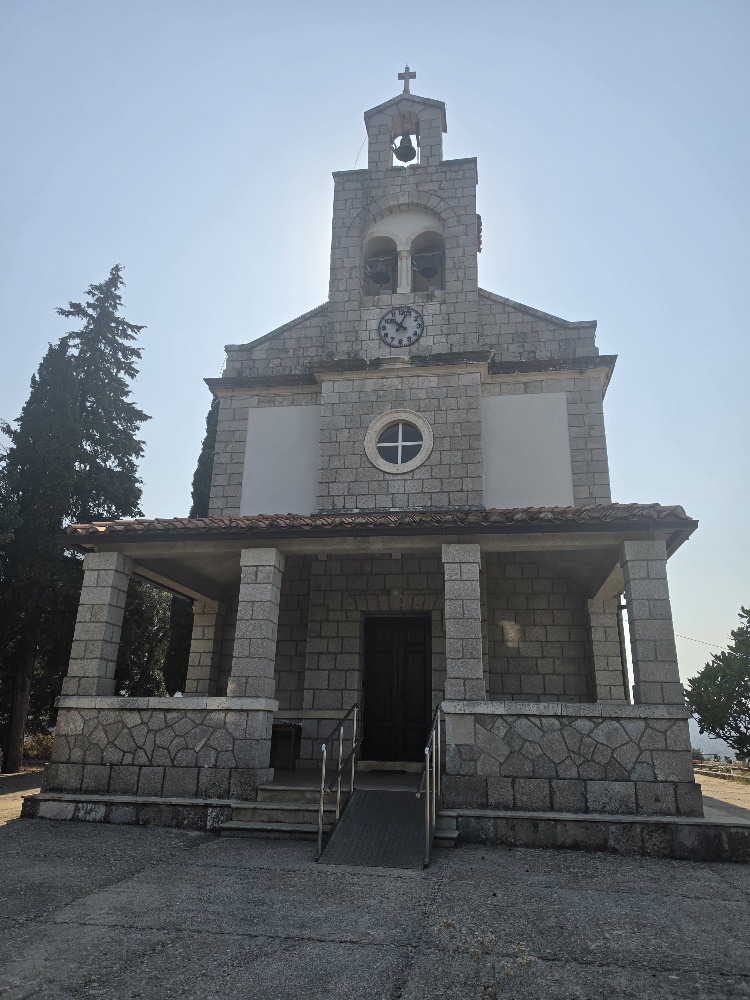
The newer church dates to 1911. It, too, was locked. I can’t tell you how sad I find this and what a poor indictment it is of the times in which we live. The work of Ćiril Metod Iveković, the bell tower wasn’t added till 1966.
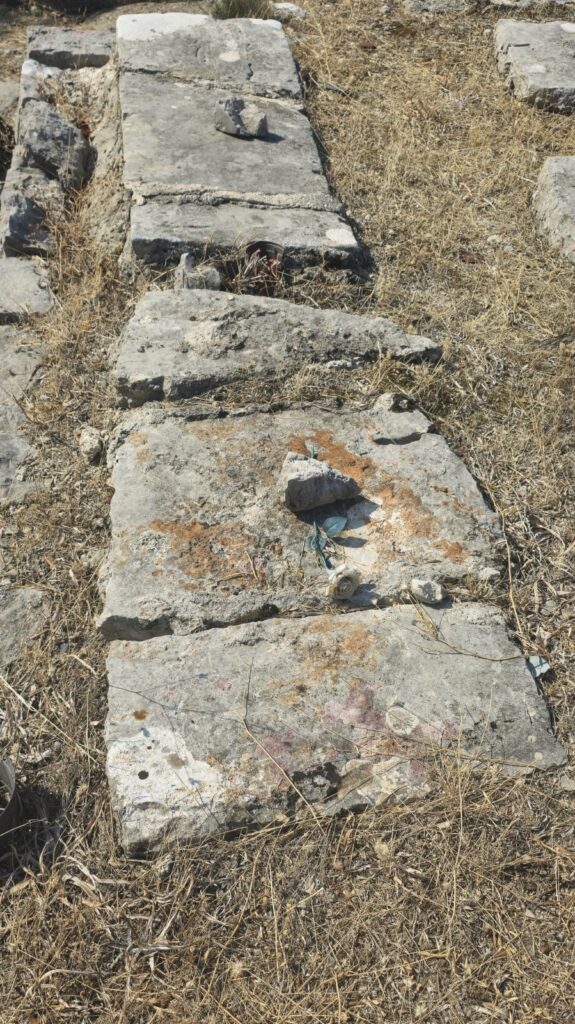
Medieval grave markers (stećci) come in two forms: slabs (ploče) and chest-like headstones (sanduci). From what I read, this cemetery once had 10 and 30, respectively. Sadly, now all that remains are some of the slabs.
My best guess says these might be some of them.
Elsewhere, as I’d come to expect, the lack of details on the headstones was frustrating.
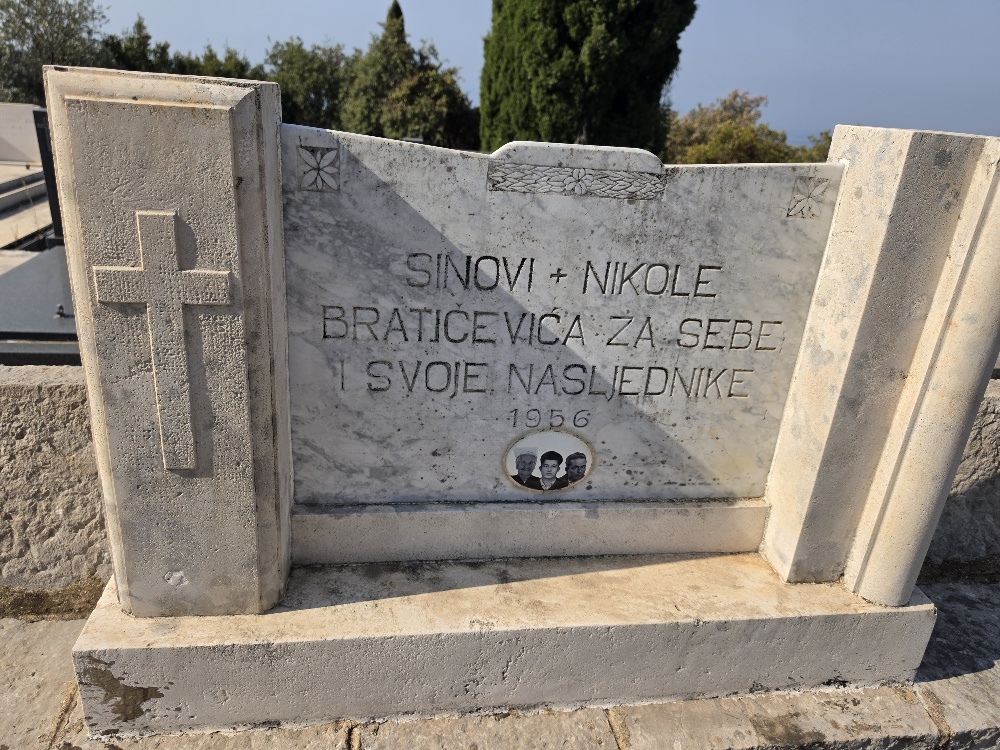
The Bratičević family grave is inscribed: “The sons of Nikola Bratičević, for themselves and their descendants, 1956.” The photo looks as if it might be three generations of men.
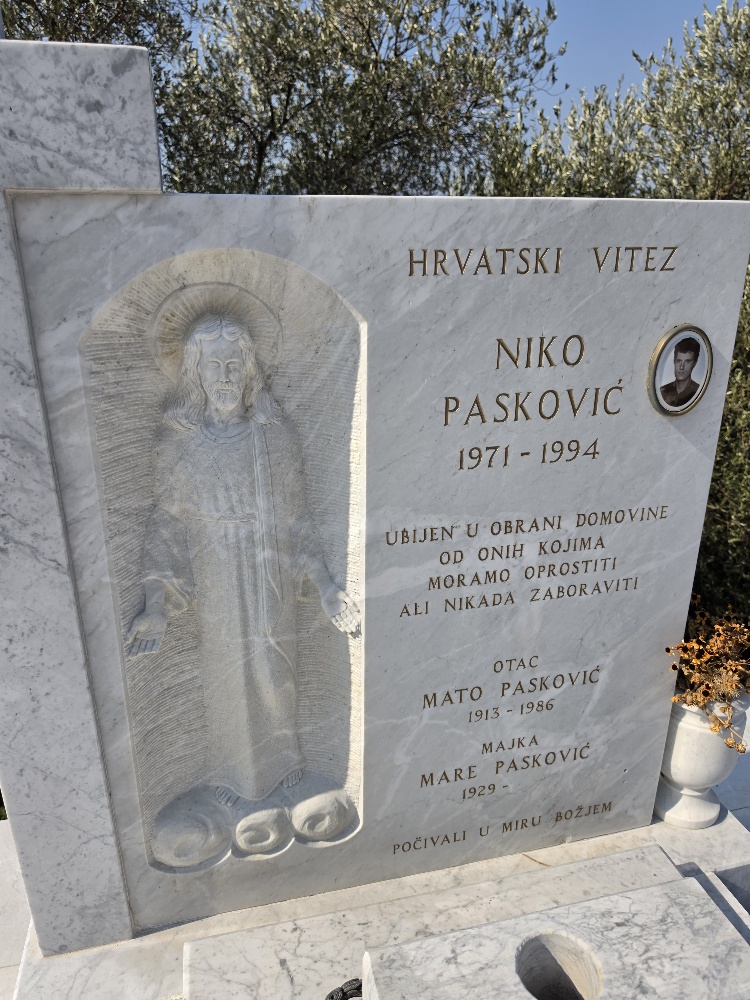
And again, another young man who died in the war.
“Croatian knight Niko Pasković 1971–1994
Killed defending the homeland by those whom we must forgive but never forget.”
From what I can find, he fought with the 163rd Brigade HV. The major fighting around Dubrovnik and Konavle was over by 1994, but the area was still an active military zone, with Croatian troops manning positions and undertaking combat/security duties. According to the military records, Niko was killed during one of those duties.
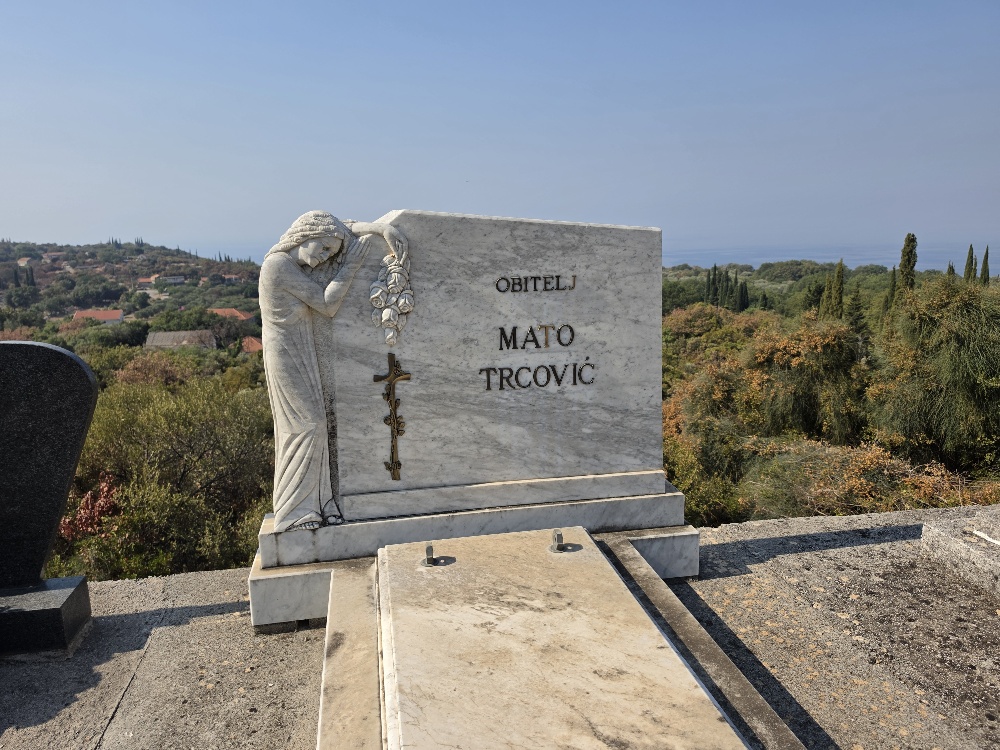
The Mato Trcović family tomb is slightly more ornate. Undated. But given the woman and the flower, later 20th century, I’d imagine.
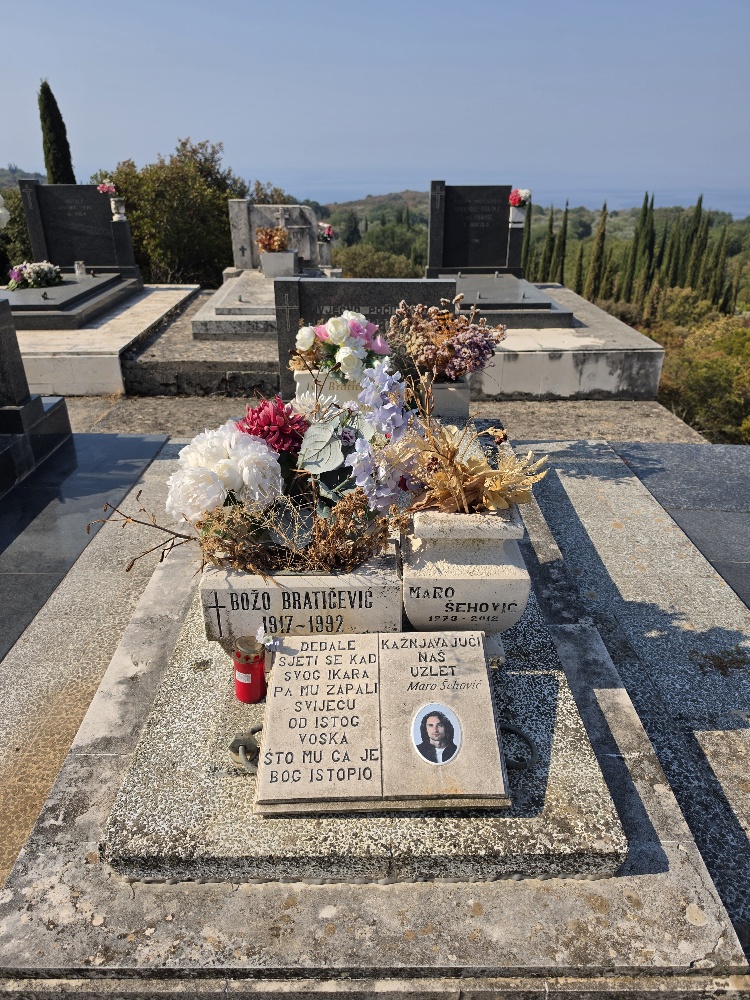
The legend of Daedalus and Icarus lives on, on the headstone of Maro Šehović (1973–2012), a Dubrovnik-born poet and sculptor, who died from pneumonia.
“Daedalus, remember your Icarus, and light a candle for him from the same wax that God melted for him.”
His was an interesting story:
He had his first solo sculpture exhibition at only 14, published his first poetry collection in 2007, and exhibited sculpture again in Dubrovnik in 2011. His second collection, was published posthumously in 2015 from poems he had left behind.
A particularly poignant line: “Ljudi ne kontaju koliko smrt sadrži besmrtnost” / “People don’t understand how much immortality death contains.”
His father, Fedja, is an author, too. Were his book, Priče iz Vitaljine (Stories from Vitaljina), translated, it’d be on my list, as the 13 stories it contains are written against the backdrop of the 1990s in the area.
I’m glad we took the time and stopped.